
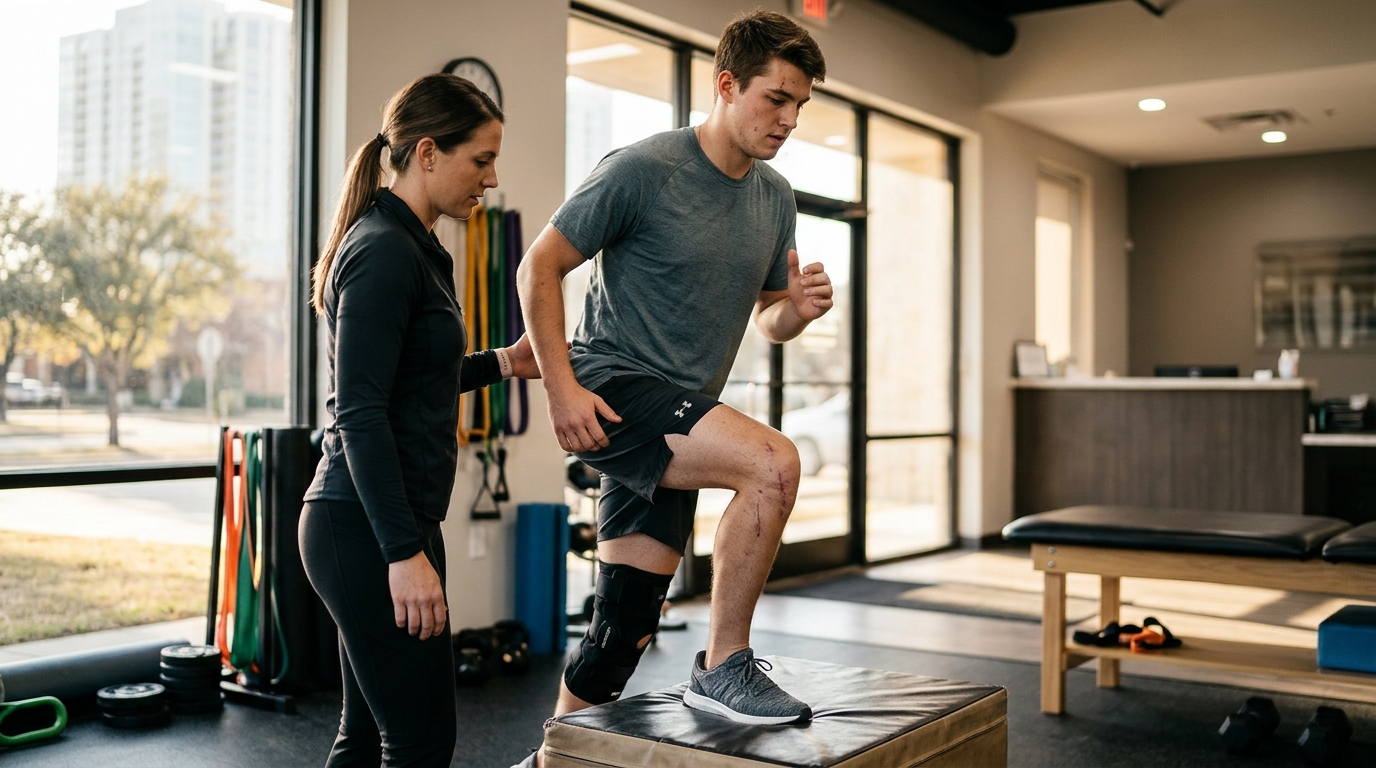
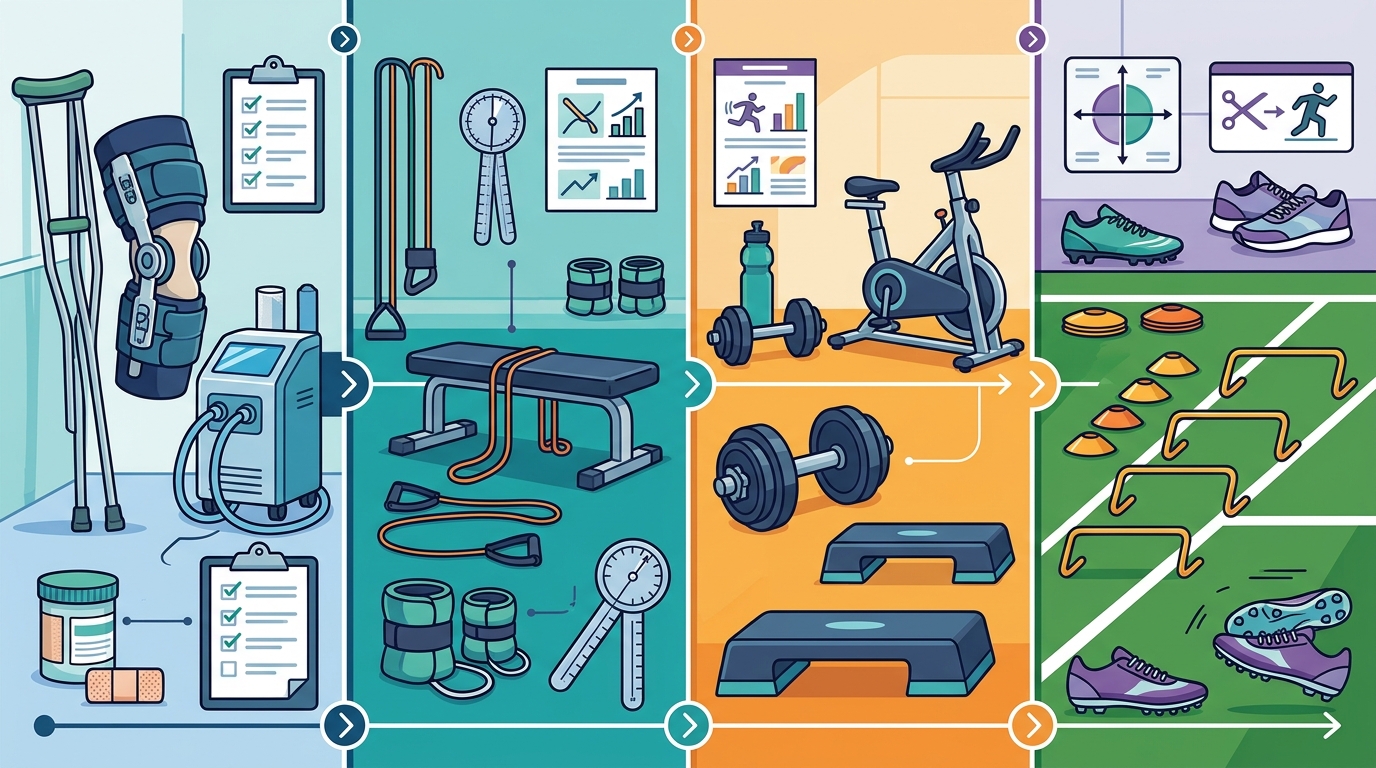
Recovery from ACL reconstruction is a structured, phased process that typically spans nine to twelve months. It moves from protecting the graft to restoring strength and finally returning to sport. At Leroy Butler, DO PLLC, we emphasize that patience and adherence to protocol are the primary drivers of long-term joint stability.
The Immediate Post-Operative Phase
The first two weeks focus on managing swelling and initiating gentle motion. Post-operative swelling is a normal inflammatory response, but aggressive management is required to prevent stiffness. Patients typically use a hinged brace to protect the graft while performing range-of-motion exercises. The goal is to achieve full extension, which is critical for normal gait mechanics.
Building the Foundation: Weeks 3 to 6
During this phase, the graft begins to biologically integrate with the surrounding tissue. Graft incorporation is the process where the tendon graft becomes vascularized and structurally sound. Patients transition from crutches to full weight-bearing. Physical therapy shifts toward strengthening the quadriceps and hamstrings. A concrete milestone is the ability to walk without a limp by week six.
Restoring Function: Months 3 to 6
By the third month, patients begin more dynamic movements. Functional stability is the ability to control the knee during pivoting and cutting motions. This phase introduces jogging and low-impact cycling. The knee must demonstrate no effusion (swelling) before progressing. At Leroy Butler, DO PLLC, we monitor these milestones closely to ensure the joint is ready for higher demands.
Return to Sport: Months 6 to 12
The final phase is the most critical for athletes. Return-to-sport criteria are objective tests that measure strength symmetry and hop performance. Most patients do not return to competitive sports until at least nine months post-op. Rushing this phase significantly increases the risk of re-injury. The knee must pass specific strength benchmarks, such as achieving 90% of the uninjured leg's strength.
Long-Term Maintenance and Health
Recovery does not end when you return to play. Long-term joint health requires ongoing maintenance to prevent osteoarthritis. Patients must continue strength training and proprioception exercises indefinitely. Regular check-ups help monitor the knee's status. Understanding the biology of the graft helps patients make informed decisions about their activity levels.
Key Takeaways
- Full recovery typically takes nine to twelve months, not weeks.
- Swelling management in the first two weeks is critical for long-term range of motion.
- Graft incorporation occurs gradually over the first six months.
- Objective strength tests, not just time, determine return to sport.
- Patience is the most important factor in preventing re-injury.
- Long-term maintenance is necessary to protect the knee from arthritis.
Frequently Asked Questions
How long do I need to wear a brace after ACL surgery?
Most patients wear a hinged brace for the first four to six weeks. The brace is typically locked in extension during sleep and unlocked for range-of-motion exercises. Your surgeon will provide specific instructions based on your graft type.
When can I start driving after ACL reconstruction?
Patients can usually drive a manual transmission after two weeks and an automatic transmission after four to six weeks. You must be able to press the brake pedal firmly and quickly without pain or hesitation.
Is it normal to feel stiffness in the first few weeks?
Yes, some stiffness is normal as the joint heals. However, persistent stiffness that limits full extension should be addressed immediately with your physical therapist to prevent long-term issues.
Can I return to work before I return to sports?
Most desk-based jobs can be resumed within two to four weeks. Physical labor or jobs requiring heavy lifting may require six to eight weeks. Always consult your surgeon before returning to physically demanding work.
What is the risk of re-injury after ACL reconstruction?
The risk of re-injury is highest in the first two years. Adhering to return-to-sport criteria and maintaining strength significantly reduces this risk. Rushing the process is the primary cause of re-tears.
Do I need to see a specialist for my follow-up care?
Yes, follow-up care with a fellowship-trained orthopedic surgeon is essential. At Leroy Butler, DO PLLC, we provide comprehensive care for knee sports medicine, ensuring your recovery is monitored by an expert.
Conclusion
ACL reconstruction is a marathon, not a sprint. Success depends on following a structured timeline and respecting the biology of the healing graft. At Leroy Butler, DO PLLC, we guide patients through every phase of recovery with evidence-based protocols. If you are considering surgery or are in the early stages of recovery, to discuss your personalized plan.