

Choosing between surgical and non-surgical Achilles tendon repair depends on your tear severity, activity level, and age. Surgical repair offers faster return to high-impact sports but carries infection risks. Non-surgical care is safer for older adults or those with medical comorbidities but may result in slightly higher re-rupture rates. At Leroy Butler, DO PLLC, we evaluate these factors to determine the best path for your specific anatomy and goals.
Surgical Achilles Tendon Repair
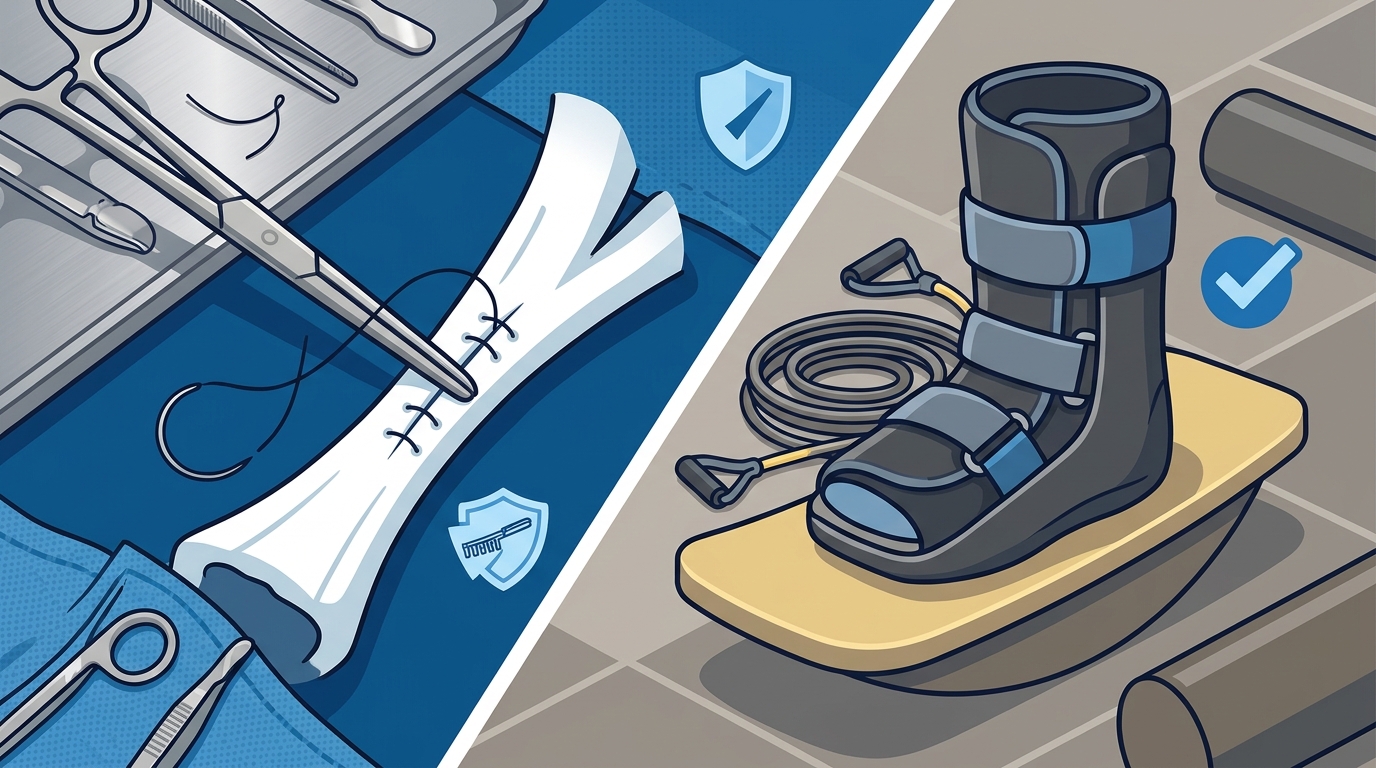
Surgical repair is the definitive treatment for complete Achilles tendon ruptures in active patients. The procedure involves reattaching the torn tendon ends using sutures. This method provides immediate structural stability. It is the preferred option for athletes and younger adults who require full strength and explosive power. The primary advantage is a lower risk of re-rupture compared to conservative management. However, surgery introduces risks such as wound infection, nerve injury, and scar tissue formation. Recovery typically involves a period of immobilization followed by progressive weight-bearing. Patients must commit to a structured physical therapy regimen to restore range of motion and strength.
Non-Surgical (Conservative) Achilles Tendon Repair
Non-surgical management is a viable alternative for patients who are not surgical candidates or prefer to avoid operative risks. This approach relies on immobilization in a cast or boot and early functional rehabilitation. The tendon heals by forming scar tissue that bridges the gap. While this method avoids surgical complications, it generally results in a slightly higher rate of re-rupture. It is often recommended for older adults, sedentary individuals, or those with significant medical comorbidities like diabetes or vascular disease. The healing process is slower, and the final tendon may be slightly thicker and less strong than the original. Success depends heavily on patient compliance with the rehabilitation protocol.
Comparison of Treatment Options
| Criteria | Surgical Repair | Non-Surgical Care |
|---|---|---|
| Re-rupture Risk | Lower | Higher |
| Return to Sport | Faster for high-impact activities | Slower, may limit explosive power |
| Complication Risk | Infection, nerve damage, scar | Minimal, primarily stiffness |
| Ideal Candidate | Young, active, healthy adults | Older, sedentary, or comorbid patients |
| Recovery Duration | Several months for full return | Several months for full return |
Choosing the Right Path for You
Choosing between these options is not one-size-fits-all. It requires a detailed assessment of your tear pattern and lifestyle. Leroy Butler, DO PLLC specializes in foot and ankle orthopedics, allowing for precise evaluation of tendon integrity. We consider factors such as the gap size, tissue quality, and your specific functional goals. The decision is made collaboratively, ensuring you understand the trade-offs of each approach.
Choose Surgical Repair If
You are under 50 years old and physically active. You play sports that require jumping, running, or sudden acceleration. You have good tissue quality with a manageable gap. You are healthy enough to undergo anesthesia and healing. You are committed to a rigorous physical therapy schedule.
Choose Non-Surgical Care If
You are over 50 and primarily sedentary. You have medical conditions that increase surgical risk, such as diabetes or poor circulation. You prefer to avoid the risks of anesthesia and infection. Your primary goal is walking comfort rather than athletic performance. You are highly motivated to follow a conservative rehabilitation plan.
Frequently Asked Questions
Can I switch from non-surgical to surgical treatment later?
Yes, but it is more complex. If the tendon does not heal properly during the initial conservative period, a delayed repair may be necessary. This often requires more extensive surgery due to scar tissue and tissue retraction. Early decision-making is critical to avoid this complication.
Does age strictly dictate the treatment choice?
No, age is a factor but not the sole determinant. A healthy 60-year-old who hikes regularly may benefit from surgery, while a sedentary 40-year-old with diabetes may do better with conservative care. The decision is based on overall health and activity level, not just the number on your ID.
What is the re-rupture rate for each method?
Studies generally show a lower re-rupture rate for surgical repair compared to non-surgical management. These rates vary based on the specific technique used and the patient's adherence to rehabilitation protocols.
How long is the recovery period for both options?
Both methods typically require several months for a full return to normal activities. The timeline is similar, but the nature of the rehabilitation differs. Surgery often involves a longer period of immobilization before starting movement, while conservative care may allow earlier functional exercises.
Is physical therapy required for non-surgical treatment?
Yes, physical therapy is essential for both options. In conservative care, therapy focuses on restoring range of motion and strengthening the calf muscles to compensate for the scar tissue. Without proper therapy, stiffness and weakness are common outcomes.
Where can I get a specialized evaluation in Dallas or Frisco?
You can consult with Leroy Butler, DO PLLC in Dallas or Frisco. Our practice focuses on foot and ankle subspecialty care, providing the detailed assessment needed to make this critical decision.