

Corticosteroid Injections
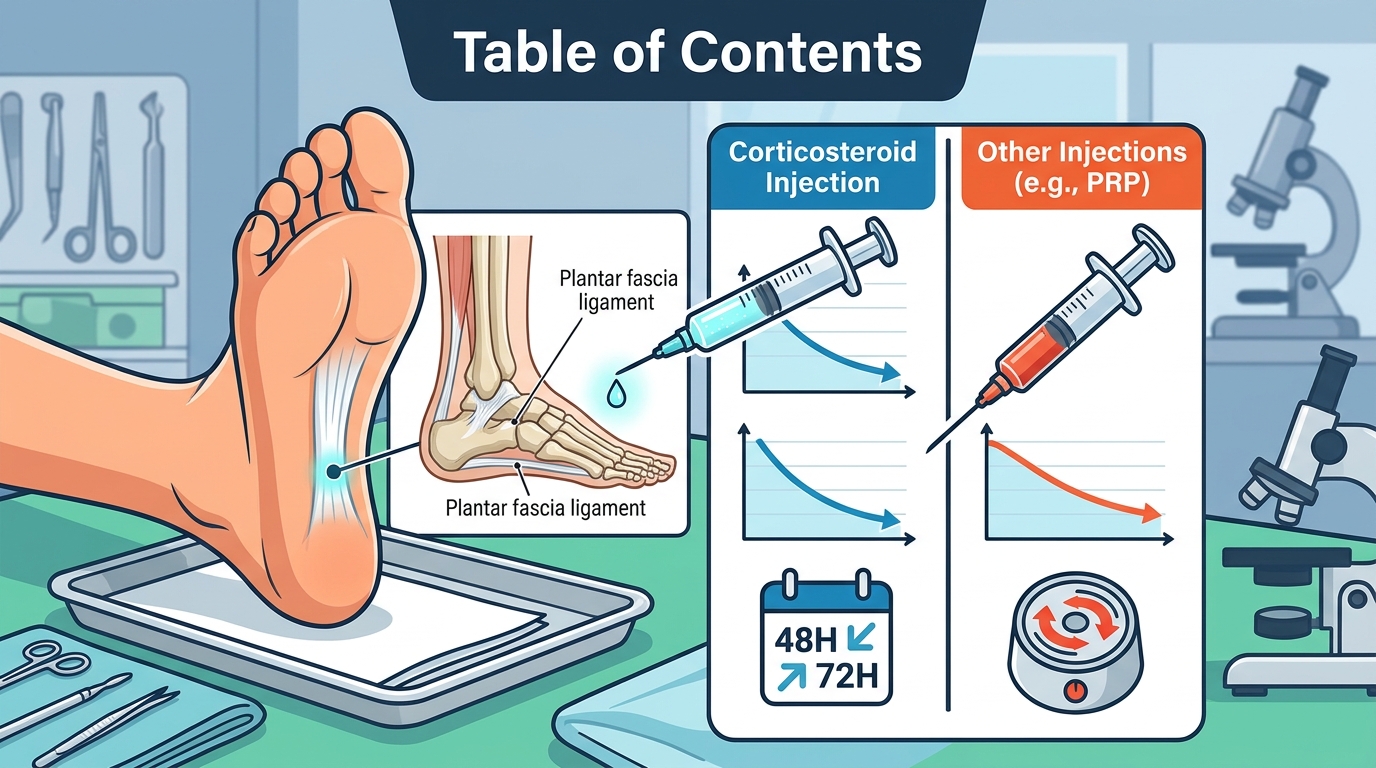
Corticosteroid injection is a medical procedure that introduces synthetic anti-inflammatory hormones directly into the plantar fascia to reduce swelling and pain. This is the most widely studied injection for plantar fasciitis. The primary strength of this option is speed. Patients often experience significant pain reduction within 48 to 72 hours. This makes it ideal for individuals who cannot tolerate daily pain while waiting for physical therapy to take effect. For additional details, review the Journal Leroy Butler DO.
However, corticosteroids have distinct limitations. They do not heal the tissue; they only suppress the inflammatory response. Repeated injections can weaken the collagen structure of the plantar fascia, increasing the risk of rupture. Most orthopedic surgeons limit patients to one or two injections per year. This option suits patients with acute flare-ups or those who need a temporary bridge to allow them to participate in rehabilitation exercises. For additional details, review the Notice of Privacy Practices.
Platelet-Rich Plasma (PRP)
Platelet-rich plasma (PRP) injection is a regenerative therapy that concentrates the patient's own blood platelets and injects them into the injured tissue to stimulate healing. Unlike steroids, PRP aims to repair the degenerative changes in the plantar fascia. The evidence for PRP is growing, with studies suggesting it may improve long-term outcomes compared to corticosteroids. The main limitation is the timeline. Pain relief is slower, often taking several weeks to months. Additionally, the initial injection can be painful, and the cost is typically higher than a standard steroid shot.
This option suits patients with chronic, degenerative plantar fasciitis who have tried conservative treatments without success. It is particularly appropriate for patients who want to avoid the tissue-weakening risks associated with repeated steroid use. At Leroy Butler, DO PLLC, we often recommend PRP for patients with thickened, degenerative fascia seen on ultrasound.
Prolotherapy
Prolotherapy is a regenerative injection technique that uses a dextrose solution to create a controlled inflammatory response, stimulating the body's natural repair mechanisms. It is often administered as a series of three to five injections over several weeks. The strength of prolotherapy is its ability to strengthen ligaments and tendons over time. It is generally considered safer than steroids regarding tissue rupture risk. The limitation is the commitment required. Patients must undergo multiple visits and may experience increased pain between sessions.
This option suits patients who prefer a natural, non-steroidal approach and are willing to invest time in a multi-visit protocol. It is less effective for acute, highly inflammatory pain compared to steroids but may offer better long-term stability for chronic cases.
Comparison Table
| Criteria | Corticosteroid | PRP | Prolotherapy |
|---|---|---|---|
| Primary Mechanism | Anti-inflammatory | Regenerative (Growth Factors) | Regenerative (Inflammatory Stimulation) |
| Onset of Relief | Fast (24-72 hours) | Slow (Weeks to Months) | Gradual (Weeks) |
| Long-Term Healing | Low (Does not heal tissue) | High (Promotes tissue repair) | Moderate to High |
| Risk of Tissue Weakening | High (With repeated use) | Low | Low |
| Number of Sessions | 1-2 per year | 1-3 sessions | 3-5 sessions |
| Ideal Candidate | Acute pain, need immediate relief | Chronic degeneration, failed conservative care | Chronic pain, prefers non-steroid |
Decision Guidance
Choosing the right injection depends on your specific clinical presentation. Choose corticosteroid if you are in acute pain, need to return to work or activity quickly, and have not had multiple injections in the past year. This is often the first-line injection for new-onset severe pain.
Choose PRP if you have chronic plantar fasciitis lasting more than six months, have failed physical therapy and orthotics, and want to promote actual tissue healing. This is the preferred option for degenerative fascia where inflammation is no longer the primary driver of pain.
Choose prolotherapy if you are wary of steroid side effects, have a history of tendon rupture, or prefer a series of natural injections. This is suitable for patients who can commit to a multi-week treatment plan.
It is crucial to discuss these options with a fellowship-trained orthopedic surgeon. At Leroy Butler, DO PLLC, we use ultrasound guidance to ensure precise placement, which improves the efficacy of any injection type. We also evaluate whether your fascia is inflamed or degenerated, as this determines which injection will actually work for you.
Frequently Asked Questions
Can I switch from corticosteroids to PRP if the steroid stops working?
Yes, but timing is critical. You should wait at least 4 to 6 weeks after a corticosteroid injection before receiving PRP. Steroids can suppress the inflammatory response that PRP relies on to trigger healing. Your surgeon will determine the appropriate interval based on your tissue response.
Is PRP more expensive than corticosteroid injections?
Generally, yes. PRP requires a centrifuge to process your blood, which adds to the cost. Corticosteroid injections are typically covered by insurance, while PRP is often considered experimental or elective by many insurers. You should verify your specific insurance benefits before scheduling.
Which injection has a higher success rate for chronic plantar fasciitis?
For chronic, degenerative plantar fasciitis, PRP and prolotherapy often show better long-term success rates than corticosteroids. Steroids provide temporary relief but do not address the underlying tissue degeneration. Studies suggest that PRP can improve outcomes in patients who have failed conservative care.
Do I need imaging before getting an injection?
Yes. Ultrasound or MRI helps confirm the diagnosis and guides the needle placement. Blind injections are less accurate and may miss the target tissue. At Leroy Butler, DO PLLC, we use image-guided techniques to ensure the medication reaches the exact site of pathology.
What are the risks of plantar fascia rupture?
Rupture is a rare but serious complication, most commonly associated with repeated corticosteroid injections. The risk is significantly lower with PRP and prolotherapy. If you experience a sudden pop or severe pain, seek immediate medical attention.