
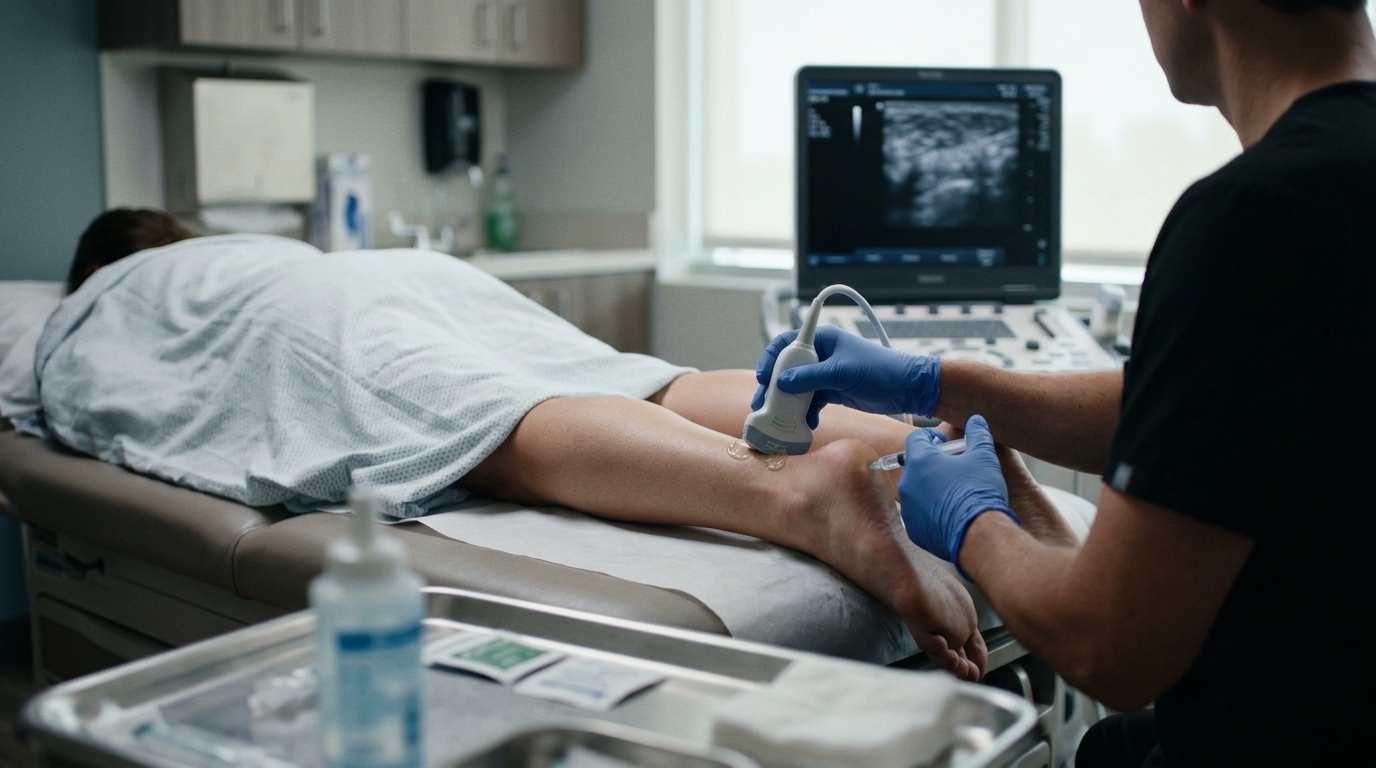
Ultrasound-guided Achilles injection is a precise, minimally invasive procedure that uses real-time imaging to deliver medication directly to the affected tendon tissue. It is generally well-tolerated, with most patients reporting only mild discomfort during the needle placement and a brief stinging sensation upon injection. At Leroy Butler, DO PLLC, we prioritize patient comfort and accuracy, ensuring the treatment targets the pathology rather than the surrounding healthy tissue.
The Role of Real-Time Imaging in Precision
Traditional injections rely on anatomical landmarks, which can be imprecise in complex areas like the Achilles tendon. Ultrasound guidance is a technique that allows the physician to visualize the needle tip in real time as it approaches the target. This visibility is critical because the Achilles tendon is a dense, fibrous structure with limited blood supply. Hitting the exact spot of inflammation or degeneration maximizes the therapeutic effect while minimizing trauma to healthy tissue.
In our practice, we use high-resolution ultrasound to map the tendon before the procedure begins. This pre-procedural scan helps us identify specific areas of thickening or fluid accumulation. By seeing exactly where the needle goes, we can avoid inadvertent puncture of the neurovascular bundle that runs alongside the tendon. This level of precision is a significant upgrade from blind palpation, offering a safer and more effective treatment pathway for chronic tendinopathy.
Step-by-Step: The Procedure Workflow
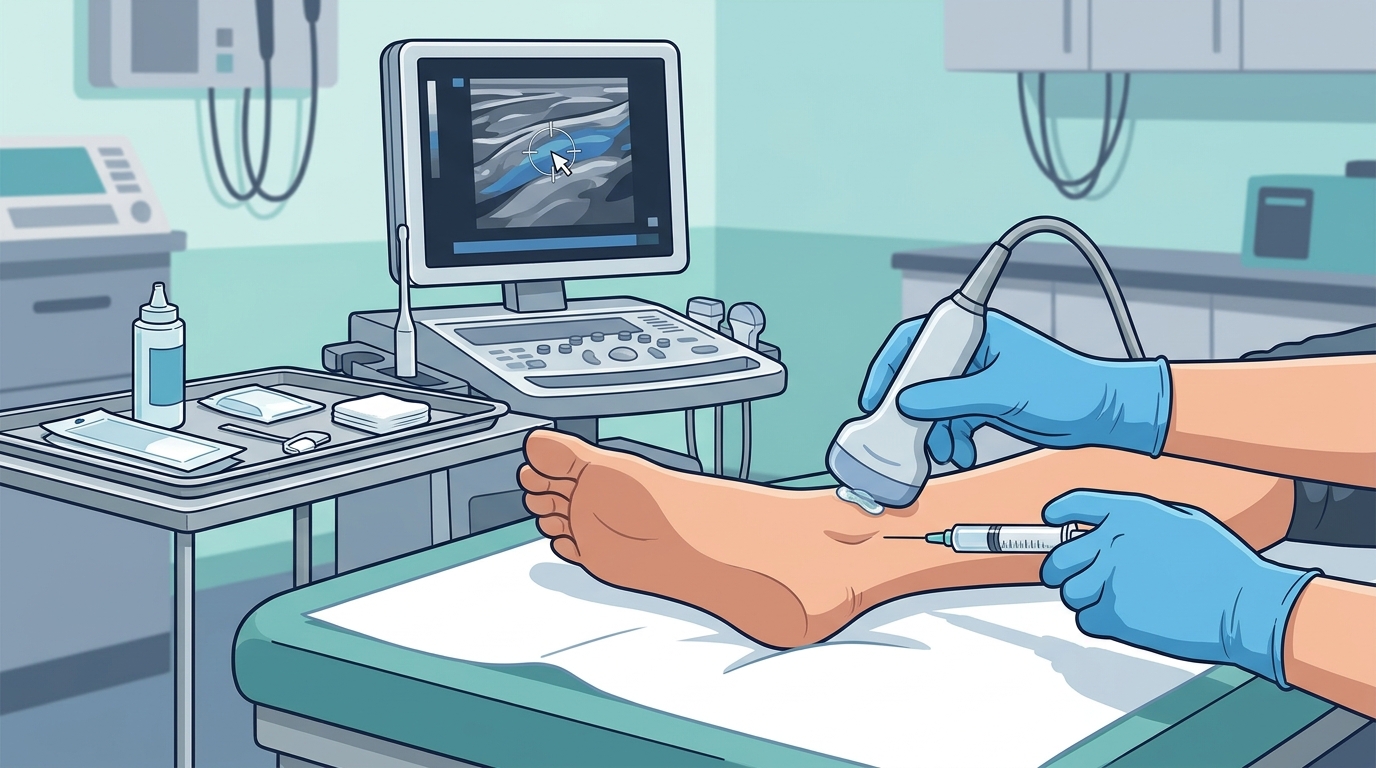
The procedure typically takes less than 15 minutes and is performed in an outpatient setting. The process follows a strict sterile protocol to prevent infection. First, the area is cleaned with an antiseptic solution. Next, a thin ultrasound probe is placed over the heel, and a sterile gel is applied to facilitate imaging. The physician then inserts a fine-gauge needle under continuous ultrasound visualization.
Once the needle is positioned correctly, the medication is injected slowly. The specific agent used depends on the diagnosis, such as a corticosteroid for acute inflammation or a regenerative option for chronic degeneration. After the injection, a small bandage is applied. Patients are usually monitored for a short period to ensure there are no immediate adverse reactions before being discharged. The entire experience is designed to be as efficient and comfortable as possible.
Pain Perception and Discomfort Levels
Many patients worry that the procedure will be extremely painful. In reality, the sensation is usually manageable. The initial needle insertion may feel like a sharp pinch or a deep pressure. As the medication is injected, some patients report a burning or stinging sensation, particularly if a corticosteroid is used. This discomfort typically lasts only a few seconds to a minute. Most patients describe the pain as a 2 or 3 out of 10 on a standard pain scale.
Post-procedure soreness is common for 24 to 48 hours. This is a normal inflammatory response to the injection and the needle track. Over-the-counter pain relievers are usually sufficient to manage this residual ache. It is important to distinguish between procedural pain and post-procedural soreness. The former is brief and sharp, while the latter is a dull, manageable ache that fades quickly. Understanding this difference helps set realistic expectations and reduces anxiety before the appointment.
Recovery Protocols and Activity Restrictions
Recovery from an ultrasound-guided Achilles injection is generally rapid, but specific restrictions are necessary to protect the tendon. Patients are typically advised to avoid high-impact activities, such as running or jumping, for 48 to 72 hours. This rest period allows the medication to settle and reduces the risk of tendon rupture, which is a rare but serious complication of corticosteroid injections. Walking is usually permitted immediately, provided it is comfortable.
Physical therapy may be recommended following the injection to address underlying biomechanical issues. Strengthening the calf muscles and improving ankle mobility are key components of long-term recovery. At Leroy Butler, DO PLLC, we coordinate with physical therapists to ensure a structured rehabilitation plan. This holistic approach addresses not just the pain, but the root causes of the tendinopathy, reducing the likelihood of recurrence.
When to Seek Immediate Medical Attention
While complications are rare, patients should be aware of warning signs that require immediate medical evaluation. Sudden, severe pain in the heel or calf, accompanied by a feeling of a "pop," may indicate a tendon rupture. Significant swelling, redness, or warmth that worsens after 48 hours could suggest an infection. Numbness or tingling in the foot that does not resolve quickly may indicate nerve irritation.
If you experience any of these symptoms, contact your healthcare provider immediately. Do not wait for a scheduled follow-up appointment. Early intervention is critical for managing potential complications. Our team is available to address urgent concerns and provide guidance on next steps. Staying vigilant during the recovery period ensures the best possible outcome.
Key Takeaways
- Ultrasound guidance ensures the medication is delivered precisely to the affected tendon tissue, improving efficacy and safety.
- The procedure is minimally invasive, typically lasting under 15 minutes, with most patients reporting mild, manageable discomfort.
- Post-procedure soreness is normal for 24 to 48 hours and can be managed with over-the-counter pain relievers.
- High-impact activities should be avoided for 48 to 72 hours to protect the tendon and reduce rupture risk.
- Physical therapy is often recommended to address biomechanical issues and prevent recurrence.
- Immediate medical attention is required for signs of rupture, infection, or persistent nerve symptoms.
Frequently Asked Questions
Does an ultrasound-guided injection hurt more than a standard injection?
No, it does not. The ultrasound itself is painless. The needle insertion and medication injection feel similar to a standard injection, though the precision may allow for a slightly smaller volume of medication, potentially reducing discomfort.
How long does the procedure take?
The actual injection takes only a few minutes. Including preparation, imaging, and post-procedure monitoring, the total time in the clinic is usually less than 30 minutes.
Can I drive home after the procedure?
Yes, most patients can drive home immediately after the procedure, provided they are not taking strong sedating medications. However, it is advisable to have someone accompany you for the first hour to ensure you feel stable.
How many injections will I need?
Most patients require only one or two injections. The number depends on the severity of the condition and the response to the first treatment. Your physician will determine the appropriate course of action based on your progress.
Is the ultrasound radiation-free?
Next Steps for Your Care
If you are experiencing persistent heel pain or have been diagnosed with Achilles tendinopathy, an ultrasound-guided injection may be a suitable option. At Leroy Butler, DO PLLC, we offer comprehensive foot and ankle care in Dallas and Frisco. To schedule a consultation, please contact our office at (972) 591-6468. Our team is dedicated to providing precise, evidence-based treatment tailored to your specific needs.