

Platelet-rich plasma (PRP) therapy for chronic plantar fasciitis involves injecting concentrated growth factors from your own blood into the heel to stimulate tissue healing. It is a non-surgical option for patients who have failed standard conservative care. At Leroy Butler, DO PLLC, we evaluate whether your specific injury profile makes you a suitable candidate for this regenerative approach.
Defining PRP and Its Mechanism
Platelet-rich plasma is a concentrated solution of platelets derived from a patient's own blood. These platelets contain growth factors that play a critical role in the body's natural healing process. When injected into a damaged tendon or ligament, the goal is to accelerate the repair of degenerated tissue. For additional details, review the Journal.
Unlike corticosteroid injections, which primarily reduce inflammation, PRP aims to promote structural healing. This distinction is vital for chronic plantar fasciitis, where the tissue is often degenerated rather than just inflamed. The procedure is minimally invasive and typically performed in an outpatient setting.
The Step-by-Step Procedure
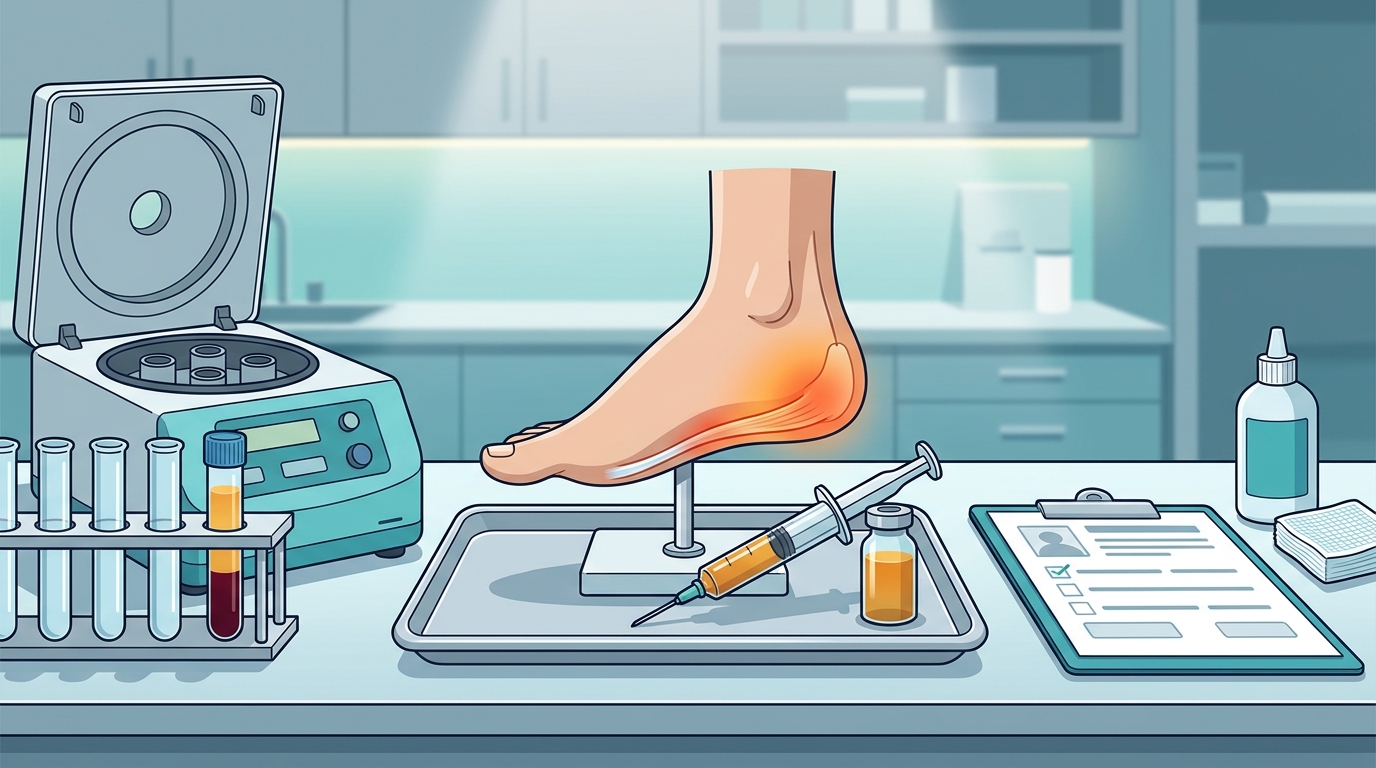
The PRP process begins with a simple blood draw, similar to a standard lab test. The blood is then placed in a centrifuge, a machine that spins the sample at high speeds to separate its components. This process isolates the platelets, concentrating them into a small volume of plasma.
Once prepared, the physician uses imaging guidance, such as ultrasound, to precisely target the plantar fascia at the heel. This precision is crucial because the plantar fascia is a thick, dense tissue. Accurate placement ensures the growth factors reach the site of maximum degeneration. The entire procedure usually takes less than an hour, including preparation and recovery time.
Evaluating the Clinical Evidence
Research on PRP for plantar fasciitis has shown promising but mixed results. Several studies indicate that PRP can provide significant pain relief and functional improvement compared to saline injections. However, the evidence is not yet definitive enough to recommend it as a first-line treatment for all patients.
Who Is a Good Candidate?
Not every patient with heel pain is a good candidate for PRP. Ideal candidates typically have chronic plantar fasciitis that has not responded to standard care. They should also be in generally good health and free from active infection or bleeding disorders. A thorough evaluation by a fellowship-trained orthopedic surgeon is necessary to determine if the tissue is suitable for regenerative therapy.
At Leroy Butler, DO PLLC, we focus on subspecialty care for the foot and ankle. Dr. Butler, a fellowship-trained orthopedic surgeon, evaluates the specific anatomy of your heel to determine if PRP is the right next step. This specialized approach ensures that the treatment aligns with your specific injury mechanism and healing potential.
Recovery and Post-Procedure Care
Recovery from PRP therapy is generally straightforward, but it requires patience. You may experience mild soreness at the injection site for a few days. It is important to avoid anti-inflammatory medications, such as ibuprofen, for a short period after the injection, as these can interfere with the healing process. Your physician will provide specific guidelines on activity restrictions.
Most patients can return to light activities within a day or two. However, high-impact activities, such as running or jumping, should be avoided for several weeks. The healing process is gradual, and you may not see full results for several months. Consistency with any prescribed physical therapy exercises is key to maximizing the benefits of the treatment.
Key Takeaways
- It is a non-surgical option for chronic plantar fasciitis that has failed conservative care.
- Imaging guidance is essential for accurate placement of the injection.
- Results are gradual, with pain relief often developing over several weeks.
- Candidate selection is critical; not all heel pain responds to regenerative therapy.
- Subspecialty evaluation by a foot and ankle surgeon ensures appropriate treatment planning.
Frequently Asked Questions
How long does PRP therapy take?
The entire process, from blood draw to injection, typically takes less than an hour. The actual injection is quick, but preparation and recovery time are included in the total appointment duration.
Does PRP hurt?
The blood draw is similar to a standard lab test. The injection itself may cause mild discomfort, but the area is usually numbed with a local anesthetic. Most patients report manageable pain levels.
How many PRP injections are needed?
Most patients require only one PRP injection for plantar fasciitis. If the first treatment does not provide sufficient relief, a second injection may be considered after a few months, but this is less common.
Can I take ibuprofen after PRP?
Generally, no. Anti-inflammatory medications can interfere with the healing process stimulated by PRP. Your physician will provide specific instructions on which medications to avoid and for how long.
Is PRP covered by insurance?
Insurance coverage for PRP therapy varies widely. Many plans do not cover regenerative medicine treatments. It is important to check with your insurance provider and the clinic to understand your financial responsibility before scheduling the procedure.
How is PRP different from cortisone shots?
Cortisone shots reduce inflammation and provide short-term pain relief but do not promote tissue healing. PRP aims to stimulate the body's natural repair mechanisms, potentially offering longer-term structural improvement.
Next Steps for Your Care
If you are struggling with chronic heel pain, it is important to seek a specialized evaluation. Leroy Butler, DO PLLC offers comprehensive foot and ankle care in Dallas and Frisco, Texas. Dr. Butler provides a detailed assessment to determine if PRP or another treatment is the best path for your recovery. To schedule a consultation, contact our team.