

Recovery from complex bunion surgery typically spans three to six months, with normal walking resuming between six and eight weeks. The timeline varies based on the specific bones fused or cut. At Leroy Butler, DO PLLC, we guide patients through this process with a focus on realistic milestones. Understanding the phases helps you prepare your home and schedule for a smoother return to daily life.
Understanding Complex Bunion Correction
Complex bunion surgery is a procedure that addresses severe deformities involving multiple bones, often requiring osteotomies or fusions. Unlike simple bunion removal, these surgeries alter the structural alignment of the forefoot. This complexity is why the recovery period is longer and more structured. Patients often wonder why a simple bump removal takes so long to heal. The answer lies in the stability required for the bones to reset correctly.
In our practice, we see many cases where the first metatarsal and the medial cuneiform are involved. These are the bones that form the base of the big toe. When they are cut and realigned, the foot must remain immobilized to allow the bone to knit back together. This biological process is non-negotiable. Rushing it can lead to non-union, where the bone fails to heal. We emphasize this to patients during the pre-operative consultation to set accurate expectations.
Phase One: The First Two Weeks
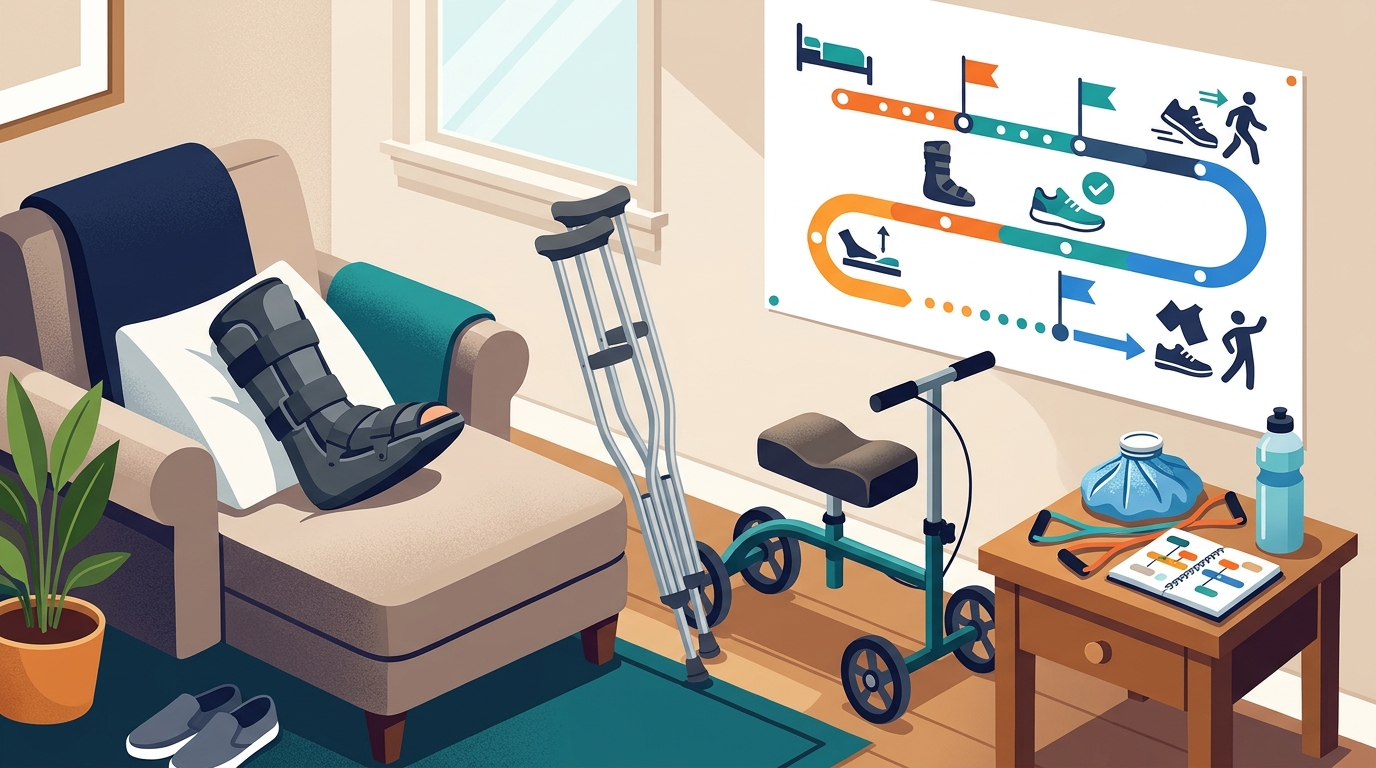
The initial phase is dedicated to protecting the surgical site and managing swelling. You will likely be in a post-operative boot or cast for the first two weeks. During this time, weight-bearing is strictly limited. Most surgeons, including Dr. Butler, recommend non-weight-bearing or toe-touch weight-bearing only. This means you can rest your foot on the ground but cannot push off it to move.
Swelling is the primary enemy in this phase. It can be significant and may last for several weeks. To manage it, you should keep your foot elevated above the level of your heart as much as possible. Ice therapy, applied for 15 to 20 minutes at a time, helps reduce inflammation. Pain is usually manageable with prescribed medication. The goal here is not to walk, but to heal. We provide detailed instructions on how to navigate your home safely during this period, including the use of crutches or a walker.
Phase Two: Weeks Three to Six
As the bone begins to heal, you will transition to partial weight-bearing. This usually happens around week three or four, depending on your X-ray results. You will start to bear more weight in the boot. This is a critical period for physical therapy. Gentle range-of-motion exercises for the toes and ankle help prevent stiffness. Stiffness is a common complaint during this phase. The foot has been immobilized, and the joints need to move again.
By week six, many patients are walking in the boot with full weight-bearing. However, this does not mean you are walking normally. You are still in a protective device. The boot supports the foot and prevents excessive bending at the surgical site. We monitor progress closely during follow-up appointments. If the X-rays show good healing, we may allow you to transition to a stiff-soled shoe. This is a significant milestone, but it is not the end of the road. The soft tissues and skin also need time to adapt to the new alignment.
Phase Three: Weeks Seven to Twelve
This phase focuses on transitioning from the boot to normal footwear. You will likely wear a stiff-soled shoe for several weeks after coming out of the boot. This shoe provides support while allowing the foot to move more naturally. By week eight, many patients are walking in regular shoes. However, the gait may still feel awkward. The muscles and tendons in the foot have been stretched or cut, and they need time to regain strength and flexibility.
Physical therapy continues during this phase. Strengthening exercises for the foot and ankle are essential. These exercises help restore the normal mechanics of walking. You may notice that your foot feels different. This is normal. The alignment has changed, and your body is adapting to the new structure. By week twelve, most patients are walking normally without pain. However, full recovery, including the resolution of all swelling and stiffness, can take up to six months. Patience is key during this final phase.
Key Takeaways
- Complex bunion surgery recovery takes three to six months for full healing.
- Normal walking typically resumes between six and eight weeks.
- The first two weeks are non-weight-bearing to protect the bone.
- Swelling is common and can last for several weeks.
- Physical therapy is crucial for restoring strength and flexibility.
- Transitioning from boot to normal shoes happens gradually.
- Full recovery, including soft tissue adaptation, may take up to six months.
Frequently Asked Questions
How long do I need to wear a boot after bunion surgery?
You will typically wear a post-operative boot for six to eight weeks. The exact duration depends on the complexity of the surgery and your healing progress. Your surgeon will determine when you can transition to a stiff-soled shoe based on X-ray results.
When can I drive after complex bunion surgery?
Most patients can drive once they are out of the boot and can operate the pedals safely. This is usually around six to eight weeks. You must be able to press the brake pedal firmly and quickly without pain. Consult your surgeon before driving.
Will I have permanent changes in my foot shape?
Yes, the goal of bunion surgery is to correct the deformity. Your foot will look different after surgery. The big toe will be straighter, and the bump will be gone. This is a permanent change intended to improve function and reduce pain.
How much pain should I expect during recovery?
Pain is usually manageable with medication. The first few days are the most painful. As the swelling goes down, the pain decreases. By week two, most patients are on over-the-counter pain relievers. If you have severe pain that is not controlled by medication, contact your surgeon immediately.
Can I work during the recovery period?
It depends on your job. If you have a sedentary job, you may be able to work from home after the first week. If your job requires standing or walking, you will likely need several weeks of time off. Your surgeon can provide a work restriction letter to help you manage this with your employer.
What activities should I avoid during recovery?
Avoid high-impact activities like running, jumping, or dancing until your surgeon clears you. This is usually after three to six months. Low-impact activities like swimming or cycling may be allowed earlier, but only if they do not put stress on the surgical site. Always follow your surgeon's specific instructions.